





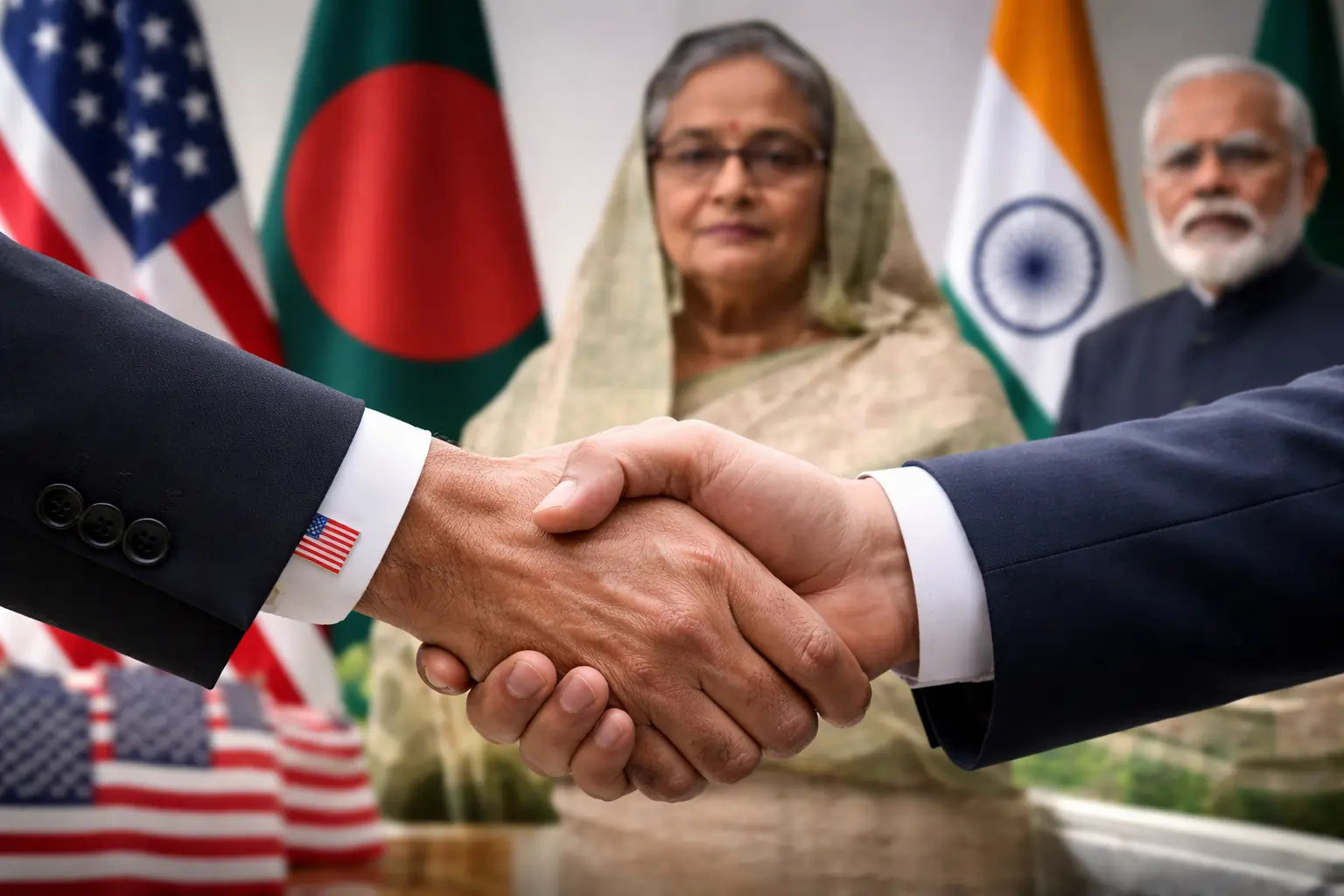
On February 9, 2026, while Narendra Modi celebrated his “historic” trade deal with Donald Trump that reduced tariffs from 50% to 18%, Trump was simultaneously signing an even better deal with Bangladesh-India’s troubled neighbor-that included zero-duty access for textiles using American cotton. Two days later, US Ambassador to Bangladesh Brent T. Christensen issued a stark warning about “risks of certain types of engagement with China” and offered Dhaka military alternatives to Chinese systems. The timing wasn’t coincidental. It was Washington sending New Delhi a message: in the new South Asia game, India isn’t indispensable anymore.
For seven decades, India anchored America’s South Asia strategy. Now, just months after Sheikh Hasina’s ouster created a diplomatic rift between New Delhi and Dhaka, the United States is pivoting toward Bangladesh with trade deals, defense offers, and diplomatic engagement that threatens to reshape regional power dynamics. The shift exposes an uncomfortable truth Modi’s government won’t acknowledge: America’s Indo-Pacific strategy doesn’t require Indian leadership when Bangladesh offers cheaper alternatives, fewer political constraints, and more desperate willingness to accommodate US demands.
As Congress President Mallikarjun Kharge put it, the US- Bangladesh deal reveals India’s agreement as a “PR-wrapped betrayal” and “strategic surrender” that puts Indian textile hubs like Tirupur and Surat at a disadvantage while incentivizing Dhaka over Indian farmers.
The Numbers That Expose India’s Disadvantage
Let us analyze what Bangladesh has achieved and what India has received in the deal. Under the US-Bangladesh mutual trade agreement signed on February 9, 2026, Bangladesh is subjected to 19% tariffs on most exports, which is only 1% higher than India’s 18% tariff. However, the actual benefit is in the textile agreement, where Bangladesh enjoys zero-duty access to the US market for garments produced from American cotton. India does not enjoy this benefit. According to Business Standard’s analysis, this has resulted in a “double whammy” for Indian exporters. First, the difference in tariffs between India and Bangladesh has reduced from 2% to only 1% in a industry that operates on razor-thin margins. Second, the zero-duty clause will encourage Bangladesh to import cotton from America and not from India.
The effect on the Indian cotton industry is catastrophic. Bangladesh is already the largest importer of Indian cotton, and the textile industry relies on Indian cotton yarn imports for its massive $50 billion garment export business. However, with the new US-Bangladesh deal, Dhaka has agreed to import $3.5 billion worth of US agricultural products, including cotton, over a period of 15 years. As Mallikarjun Kharge said: “By offering Dhaka zero-duty access to use American cotton, Washington has effectively encouraged Bangladesh over Indian farmers to save their own margins. As textile hubs like Tirupur and Surat are burdened with 18% taxes, our neighbour gets a 0% fast track, which is a double whammy to Indian cotton and garments combined.”
Bangladesh agreed to a broader US-led pact that goes beyond textiles. It must spend $15 billion more on American energy supplies each year and drop the data localization policies, which allow for free flow of data to the US for business transactions. According to the trade pact text reviewed by Business Today, Bangladesh must ensure that “there are no discriminatory purchasing policies in favor of the goods of the United States in relation to goods of other countries.”
If Bangladesh signs a digital agreement with any country that undermines basic American interests in the issue, the US retains the right to terminate the entire agreement and reimpose tariffs. In another move, Bangladesh has agreed to facilitate the flow of American investment in oil and gas, insurance, and communication by removing the limit on foreign ownership. It must accept American agricultural biotech goods deemed safe by the US authorities without requiring separate approval for Bangladesh.
The Military Dimension: Pentagon’s New Bangladesh Bet
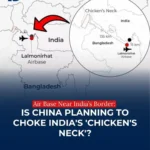
The economic pivot is matched by growing defense cooperation that directly challenges India’s regional security dominance. In his February 11 Reuters interview, Ambassador Christensen specifically flagged two developments fueling US concern. First, Bangladesh’s recent defense agreement with China to establish a drone factory near the Indian border, a move foreign diplomats consider alarming due to proximity to sensitive regional hotspots. Second, ongoing Bangladesh-Pakistan discussions for purchasing JF-17 Thunder fighter jets, multi-role aircraft co-developed by Pakistan and China.
Christensen’s warning was unambiguous: “The United States is concerned about growing Chinese influence in South Asia and is committed to working closely with the Bangladeshi government to clearly communicate the risks of certain types of engagement with China.” To counter this, Washington is offering “a range of options to help Bangladesh meet its military capability needs, including US systems and those from allied partners, to provide alternatives to Chinese systems.” While specific systems weren’t disclosed, this builds on existing US-Bangladesh military cooperation including joint exercises and progress under the interim Muhammad Yunus government.
The strategic calculation is clear. Bangladesh’s population of 175 million, location in the Bay of Bengal bordering India and Myanmar, and emerging defense needs make it valuable real estate in America’s Indo-Pacific strategy. With China investing heavily through Belt and Road Initiative infrastructure and military projects, the US sees opportunity to prevent Beijing from dominating the region’s security architecture and it doesn’t need India’s permission or cooperation to do so.
Compare this to India’s situation. Despite Modi’s celebrated “strategic partnership” with Washington, India just surrendered cheap Russian oil under US pressure, cut its Chabahar port investment to appease American sanctions, and accepted monitoring of oil imports through Trump’s executive order. Bangladesh, by contrast, is simultaneously engaging China militarily, discussing defense deals with Pakistan (India’s arch-rival), and securing preferential US trade terms, all without facing the kind of public humiliation Modi endured when Trump claimed India “agreed to stop buying Russian Oil.”
Why Bangladesh Shifted from India to US
The pivot stems directly from the August 2024 student uprising that ousted Prime Minister Sheikh Hasina, who had maintained close ties with New Delhi for over a decade. Hasina’s exile in India—where she remains despite Dhaka’s extradition demands for corruption and human rights abuse charges-fueled anti-India sentiment and bilateral tensions. According to multiple reports, India suspended visa services, halted financial assistance, and even cricket matches were canceled, including Bangladesh’s refusal to travel to India for the 2026 Men’s T20 World Cup citing safety concerns.
This diplomatic vacuum created opportunity. Under interim leader Muhammad Yunus, a Nobel laureate with no historical ties to India-Bangladesh actively diversified partnerships. The strained India relationship prompted warming ties with Pakistan, a historic rival of India, including the JF-17 fighter jet discussions. China deepened involvement with the drone factory agreement. And the United States emerged as an attractive alternative offering economic incentives and military options without India’s historical baggage.
The economic imperative reinforced this shift. Bangladesh graduates from Least Developed Country status in November 2026, ending preferential trade access to key markets. With Modi’s India-US deal reducing Indian tariffs to 18%, Bangladeshi garment exporters faced existential threat of losing US market share to Indian competitors. As Sunday Guardian Live reported, fears of job losses in the garment sector-which employs millions-accelerated Bangladesh’s rush to secure its own US deal with better terms than India achieved.
The timing is revealing. The US-Bangladesh trade agreement was signed February 9, 2026 –just three days before Bangladesh’s pivotal general election on February 12, the first since Hasina’s ouster. Washington negotiated and finalized this deal with unprecedented speed, signaling American eagerness to lock in Dhaka’s alignment before a new government takes power. Ambassador Christensen confirmed US willingness to work with whichever government emerges, including increased engagement with the once- banned Islamist party Jamaat-e-Islami-despite this potentially straining US-India relations given Jamaat’s historical anti-India stance.
What It Means for India: Strategic Isolation
The implications for India are severe and multifaceted. Economically, Indian textile and cotton exporters face heightened competition from Bangladesh with better US market access. Rajesh Masand, secretary general of the Confederation of Indian Textile Industry, told Business Standard that zero reciprocal tariffs on certain Bangladeshi goods “may affect India’s competitiveness in that market.” With textile hubs like Tirupur and Surat already struggling, the US-Bangladesh deal threatens thousands of jobs and billions in export revenue.
Geopolitically, India’s regional dominance erodes as Bangladesh pivots toward US-China balancing without New Delhi’s input. The drone factory near India’s border, JF-17 fighter discussions with Pakistan, and US military cooperation all proceed despite Indian security concerns. Dhaka no longer seeks India’s approval for strategic decisions, a dramatic shift from the Hasina era when New Delhi held effective veto power over Bangladesh’s major foreign policy choices.
Diplomatically, India’s isolation deepens. The Rohingya refugee crisis-with 1.2 million sheltered in Bangladesh since 2017-saw US emerge as the largest aid contributor with $2 billion in new worldwide funding. Ambassador Christensen explicitly called for greater international support, stating “The US cannot sustain the bulk of the effort alone.” Yet India’s contribution remains minimal compared to American assistance, undermining New Delhi’s claims of regional leadershi
Most damaging is the credibility cost. Congress leader Mallikarjun Kharge’s characterization of Modi’s US deal as “PR-wrapped betrayal” resonates because the US- Bangladesh agreement exposed India’s supposed “historic win” as strategic defeat. Kharge asked pointedly: “Is this a victory or a PR-wrapped betrayal that sacrifices India’s strategic national interests and export engine at the altar of Epstein Files?” The reference to Epstein Files-suggesting compromising leverage-reflects opposition belief that Modi capitulated under pressure Trump can deploy whenever convenient.
The pattern is unmistakable. India surrendered Russian oil, abandoned Chabahar, accepted US monitoring of imports, and secured 18% tariffs while celebrating victory. Bangladesh gave up data localization and agricultural biotech approvals but secured zero- duty textile access, $18.5 billion in committed US purchases, and defense cooperation alternatives to Chinese systems. Objectively, Dhaka’s negotiators extracted better terms than New Delhi’s-a humiliating outcome for a country that claims great power status.
From Partner to Placeholder
The US strategic shift toward Bangladesh represents more than tactical diversification, it signals fundamental reassessment of India’s value in American South Asia strategy. When Washington can achieve its objectives-countering China, securing trade advantages, promoting regional stability-through Bangladesh without navigating India’s strategic autonomy complications, it will choose the easier path.
For India, this is the bitter harvest of Modi’s foreign policy contradictions: claiming strategic autonomy while surrendering to US pressure, celebrating partnerships while hemorrhaging leverage, projecting power while regional neighbors pivot away. As Bangladesh secures better US trade terms, hosts American military cooperation discussions, and deepens Chinese defense ties simultaneously, India watches its neighborhood slip from its grasp.
The question isn’t whether the US is choosing Bangladesh over India to counter China. It’s whether India matters as much to America’s South Asia strategy as Modi’s government pretends.








Leave a comment