



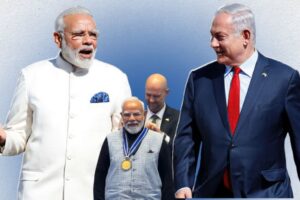



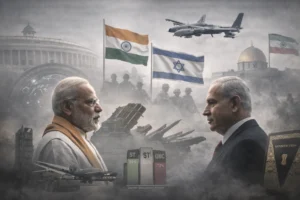
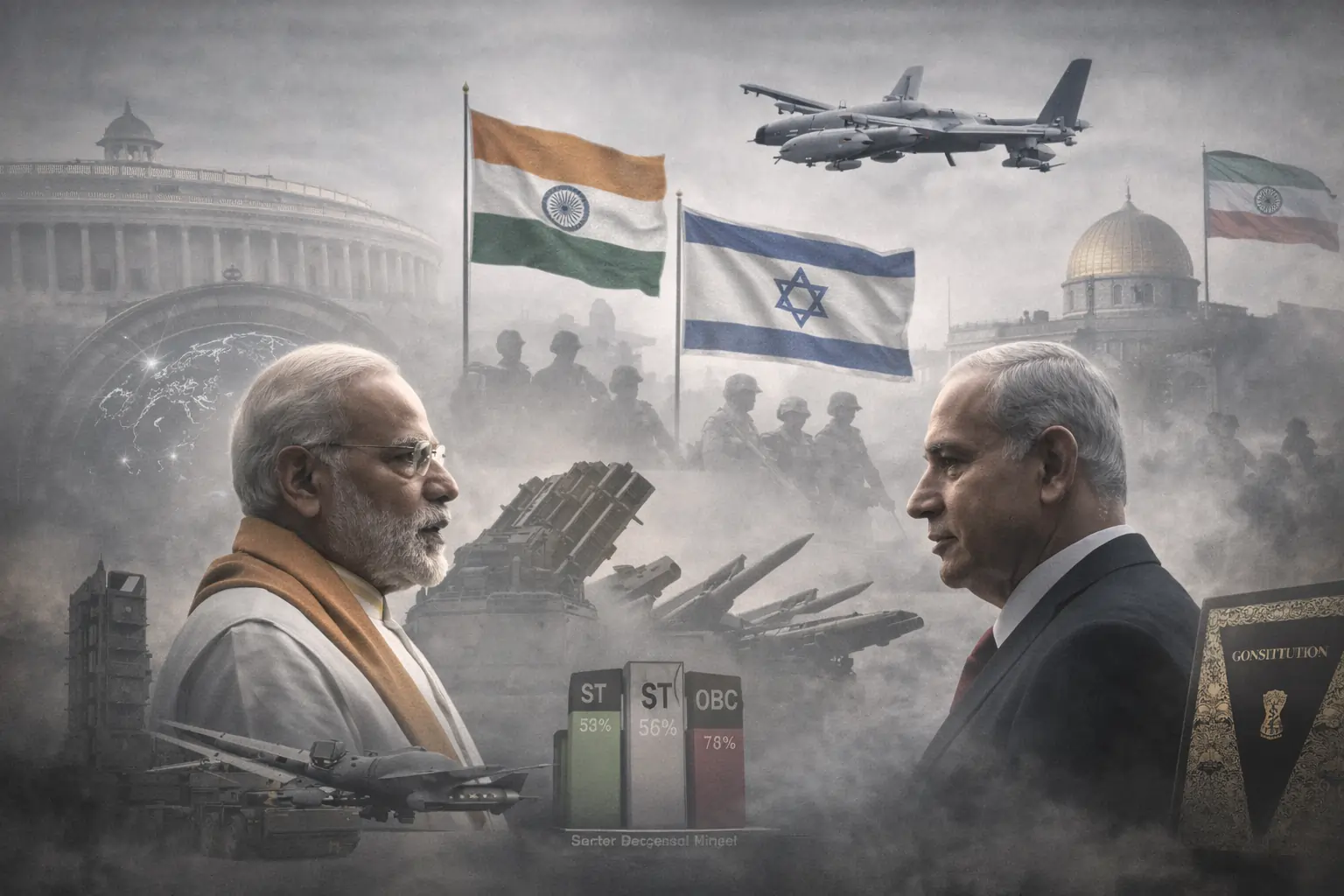
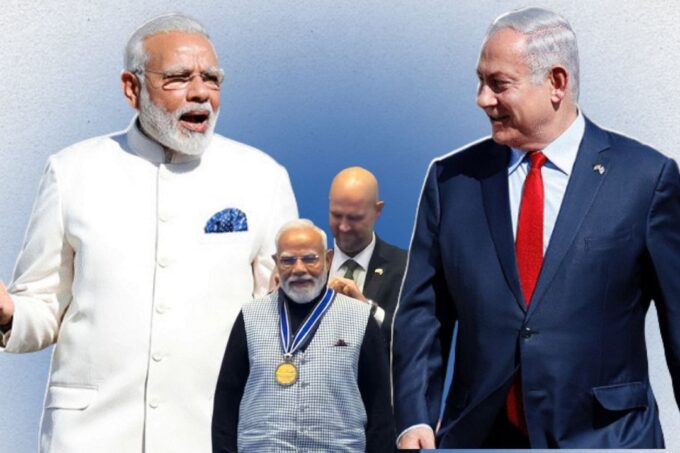
The rising diplomatic engagement between New Delhi and Jerusalem signifies a radical shift in India’s foreign policy approach. India has historically adopted a pro-Palestine stance, acknowledging the PLO as the first non-Arab country to do so. Contrarily, Modi’s India has clearly moved in the opposite direction and become pro-Israel. As Modi undertakes his second visit to Israel, the term ‘special relationship’ is now used in a broader context than the historically exclusive use for the UK and US partnership. It is now also applied to India and Israel which brings with it a new set of challenges associated with stripping away more of India’s traditional foreign policy values.
The Base of the New Relationship: The Military-Industrial Complex
The core of the new India-Israel relationship is the Indian military. Between 2015 and 2019, India’s purchases of military technology from Israel shot up by a staggering 175%, making India the largest buyer of Israeli weapons.
From mere consumer to co-producer: With the new ‘Make in India’ policy, Modi’s government has moved to greater ownership in Israel’s military and surveillance technology, now also producing the associated drones and missile systems.
Tactical Dependency: With Pegasus spyware controversy to the Israeli Heron drones used at the Line of Actual Control (LAC) with China, the Israeli ‘defense’ systems applied in India’s internal and external security frameworks are escalating.
The $10 Billion Horizon: Future collaboration is anticipated to hit $10 billion in upcoming years, targeting frontier technologies such as laser defense systems and quantum computing.
The Silent Pivot: De-Hyphenation or Abandonment?
The most important result of this “special relationship” is India’s historic dedication to the Palestinian cause. The Modi administration has refined the strategy of “de-hyphenation,” regarding its relations with Israel and Palestine as entirely distinct entities.
Critics believe that de-hyphenation is a euphemism for neglect. By neglecting to visit the West Bank or interact with Palestinian leadership during prominent visits to Israel, India implicitly indicates that Palestinian sovereignty is no longer a priority. Despite the humanitarian crisis in Gaza escalating to catastrophic proportions, Delhi has upheld a stance of “steadfast support” for Israel’s narrative of self-defense, offering what numerous international observers describe as “diplomatic cover” at the UN and The Hague.
The “Hexagon” and Iranian Dilemma
Netanyahu’s vision of a “Hexagon” suggests alliances with India, the UAE, and Mediterranean countries to form a bloc against Iran, putting India in a difficult position. Historically, India has tried to maintain at least a minimally cooperative relationship with Iran to keep the energy relationship and trade with Iran through the Chabahar Port, which is the only access point to Central Asia that does not go through Pakistan. By engaging in such a close strategic relationship with Israel, India risks:
Iranian Alienation: Iran might react to Israel and India’s energy relationship by cutting energy exports to India and/or by stopping the construction of trade routes through Iran with India.
Middle Eastern Cold War Involvement: India is likely to become involved in a Middle Eastern Cold War that India has strategically avoided.
Domestic Muslim Conflict: India has a large Muslim population, and many of them are likely to oppose India’s close relationship with Israel, which is considered an occupying power.
Ideological Symmetry: Beyond Realpolitik
Besides the defense contracts, an important relationship that is even stronger is the ideological symmetry between Hindutva and Zionism.
Both movements focus on returning to their countries of origin, and often characterize their national identities in contrast to a perceived “common threat.” This emotional and political cohesion facilitates the partnership, allowing both leaders to bolster their nationalist credentials domestically. ended Israel’s isolation, while Modi is also proving that India is now, in a respect, a high-tech ally, a global player.
The India-Israel alliance is a prime example of India’s Realpolitik strategy. By aligning with Israel, India removes the long-standing ideological barrier to militarizing and securing its border which is now complemented by practical intelligence.
India has taken a long-term ideological bet by aligning itself with the Israeli state. Modi’s address to the Knesset marks the public unveiling of the “special relationship” and an aggressively more cynical chapter of Indian foreign policy. As the Middle East remains volatile, providing India with the economic and security dividends of border control and militarization, India will now be perceived as having a long ideological bet on complicity in regional wars.










Leave a comment