





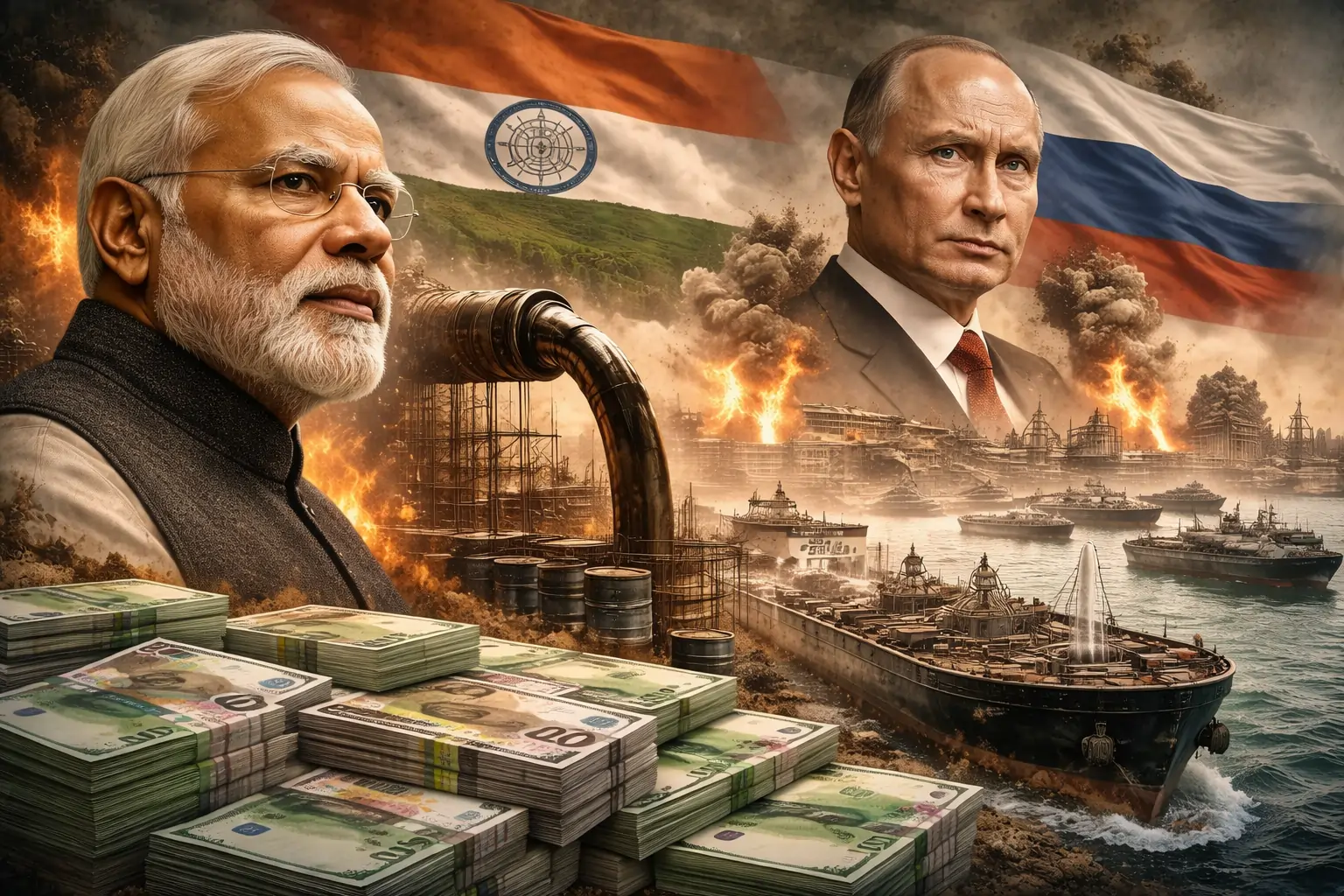
Global energy geopolitics have drastically changed since the start of Russia’s invasion of Ukraine in February 2022. As the West hurried to cut off relations with Moscow in order to deplete the Kremlin’s military apparatus, New Delhi opted for a very different course of “strategic autonomy.” India has imported Russian oil valued at a staggering €144 billion since the start of the conflict, according to a recent report. A closer look reveals a more cynical reality: an opportunistic mercantilist policy that has effectively made India the main financier of a protracted and brutal conflict, despite Indian officials framing this as a brilliant move of national interest and energy security.
It is hard to exaggerate the magnitude of the €144 billion figure. To put it in perspective, this enormous capital infusion into the Russian economy supplies the vital liquidity needed to maintain a high-intensity war of attrition and stabilize the Ruble. In response to Russian aggression, the G7 and the EU imposed embargoes and price caps, but India did the exact opposite. It increased its imports from almost nothing to over 40% of Russia’s market share in certain months, making it the country’s largest seaborne crude consumer.
New Delhi’s defense has not changed: it must protect its economy from shocks to global prices and give top priority to the energy needs of its 1.4 billion citizens. But when examined closely, this “humanitarian” defense is not very convincing. According to data, the average Indian consumer has not seen a significant drop in fuel prices as a result of the windfall from discounted Russian crude. Rather, the true winners have been India’s private refining behemoths, like Reliance Industries and Nayara Energy (owned in part by Rosneft of Russia). These organizations have been involved in a profitable “laundry service” in which they purchase inexpensive Russian crude, refine it into diesel and jet fuel, and then export it back to Western markets that have prohibited direct imports from Russia. India is essentially a middleman in a global sanctions-dodging scheme rather than merely an importer.
Furthermore, there is a serious ethical and environmental risk associated with India’s reliance on the “shadow fleet”, an outdated, underinsured network of tankers used to transport Russian oil above the $60 price cap. India is actively undermining the effectiveness of international law and collective security mechanisms by enabling these transactions. India’s ambitions to be a “Vishwaguru” (world leader) and a permanent member of the UN Security Council are incompatible with this behavior. It is impossible to support a rules-based order and the “Global South” while also financially supporting the biggest territorial integrity violation of the twenty-first century.
India’s position betrays the democratic ideals it says it shares with the West. New Delhi talks about “dialogue and diplomacy,” but its bank transfers reveal otherwise. The €144 billion sent to Moscow is a political decision rather than an impartial business transaction. It is a decision to put immediate financial gain ahead of long-term international stability.
In the face of an existential threat to international norms, India is not only exercising “strategic autonomy” but also moral neutrality by carrying on with this trade expansion. The blood-stained benefits of this trade are becoming more difficult to overlook as the conflict in Ukraine continues into its fourth year. India may have reduced its energy costs by billions, but this came at the expense of its reputation abroad. and its claim to moral leadership may be far higher. In the final tally of history, the €144 billion will be remembered not as a triumph of Indian diplomacy, but as the price for which New Delhi looked the other way.





Leave a comment