




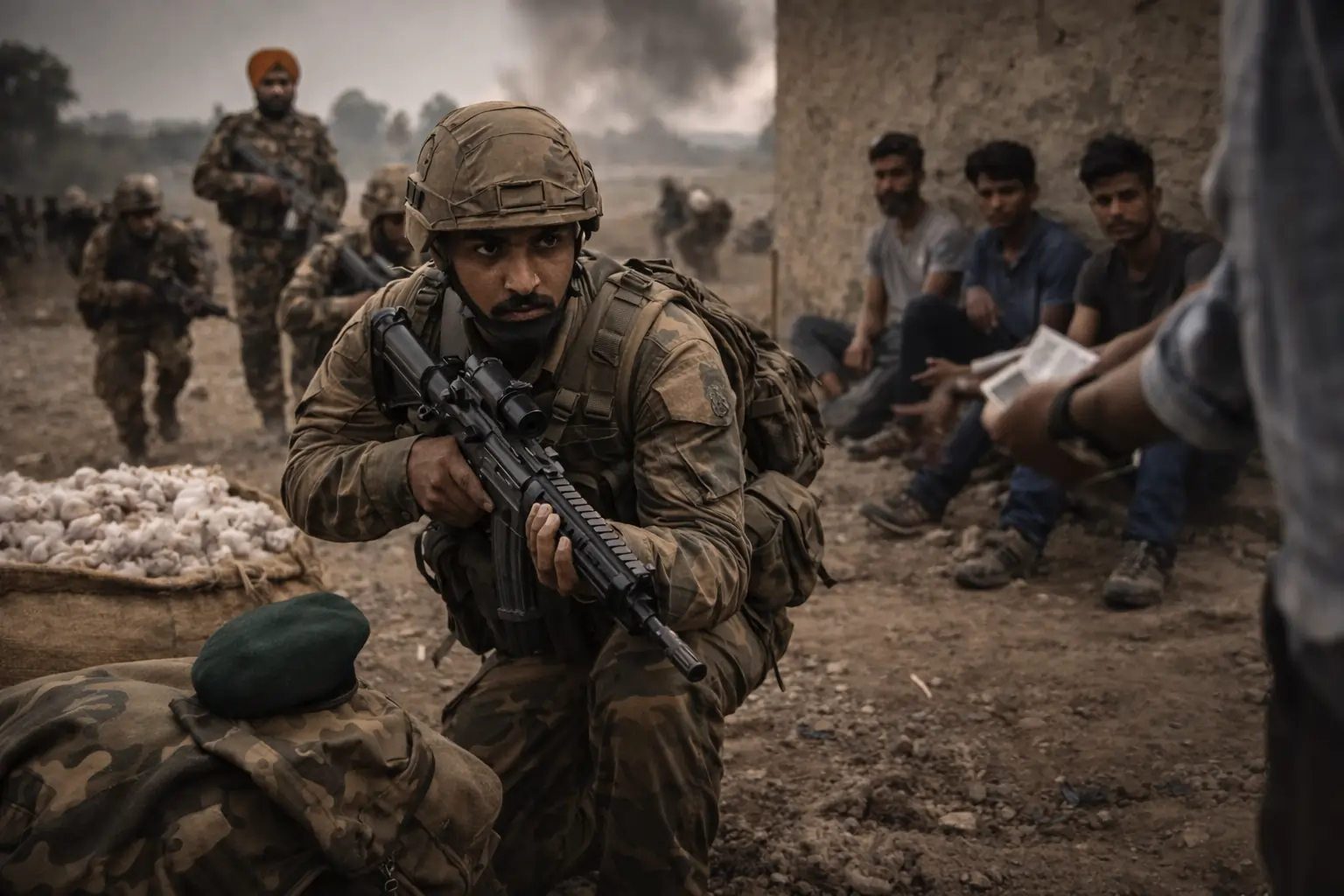
The introduction of the Agnipath Scheme in June 2022 marked the most radical overhaul of the Indian Armed Forces recruitment policy since independence. For the first time, the Permanent Commission model has been replaced with a four-year “tour of duty.” It has been more than a year since the policy’s implementation and retired generals, sociologists, and regional leaders from the ‘sword arm’ of India, particularly Punjab, have begun to voice their concerns. They warn against the possible ramifications of the state being fiscally responsible and losing the social cohesion of its border states and the military’s professional ethos.
Traditions have a considerable value in all cultures and societies. In India, the military service tradition of the Sikhs, Marathas, and Rajputs is not a job; it is a sacred service. In Punjab’s ‘Martial Tradition’, it was customary for several individuals of the same family to serve in the same regiment, be it the Sikh Regiment or the Punjab Regiment. Such practice fostered a strong esprit de corps, which is a psychological force, not easily quantifiable, but important in warfare due to the level of cohesion, self-sacrifice and commitment among the troops. Some critics of the Agnipath scheme say that it treats soldiers like ‘contractual laborers’ instead of doing real soldier work. The government the emotional bond a soldier has with his unit by limiting service to only four years for 75% of recruits (Agniveers). Passionate veterans say that ‘Josh’ and ‘Jazba’ cannot be created in four years. A soldier has little incentive to make the of the ultimate sacrifice for a ‘Paltan’ (unit) if he knows he will only be there for four years.
Economic Fragility and the ‘Agniveer’ Conundrum
The Agnipath scheme’s primary motivation was economic. An undue share of India’s defense budget goes towards remunerative and pensioning defense personnel. This constrains the budget available for modernization and technologically advanced weapons. By removing lifetime pensions for most recruits, the government hopes to free up funds for modernization.
Nonetheless, the social and economic impact is immense. In case of Punjab and Haryana’s rural youth, the army provided social mobility. There is a permanent salary, parental medical, and pensions that secure you financially when you get old. With the Agnipath scheme, an Agniveer is discharged at 21 or 22 years of age with a ‘Seva Nidhi’ of around 11 to 12 lakh rupees, but no pension, no job guarantee, and no medical security. In a country with significant youth unemployment, being ‘retired’ at 21 is a real issue. This has caused a change in the aspirations of the youth. Coaching classes for army exams in Punjab, which were once packed, are now deserted. Instead, young men flock to IELTS coaching classes to emigrate to the West instead of taking a short contract with the Indian government.
Operational Readiness: Can “Tourists” Fight Wars?
From a tactical viewpoint, numerous former lieutenant generals have branded the training duration for Agniveers – around six months – as ‘entirely insufficient’ There is no doubt that modern warfare is straightforward, but there is a need for a high degree of modern electronic warfare, ballistic and communication systems expertise.
Historically, a soldier takes between three to five years to fully integrate and master their trade. In the current structure, by the time an Agniveer becomes a veteran, their contract is up. This causes a ‘turnstile’ effect in the military, where a large segment of the front line is in a permanent state of ‘learning’ and not ‘doing’. There is serious risk of this significantly reducing the overall combat effectiveness in a high-altitude theater like the LAC or the LoC where experience and physical acclimatization are a question of life and death.
The Internal Security Nightmare
Possibly the most disturbing critique of the scheme is the likely ramifications on internal security. Approximately 30,000 to 40,000 weapon trained young men will be sent back to civilian life every year and be left without any visible means of income. In regions such as Punjab, which has a history of insurgency, and a continuous spread of the drug problem, this is a ‘ticking time bomb’. Critics believe these demobilized soldiers, disgruntled and jobless, would be very susceptible to recruitment by
- Organized crime syndicates: Who would find their discipline and weapons training a considerable asset.
- Radical/Secessionist movements: Who would be able to manipulate their frustration with the state.
Given the state’s monopoly on violence, the “militarization” of society, and the rise of private militias and mercenaries, it’s clear that the Agnipath scheme demonstrates a growing trend towards a militarized society.
A common element to the reactions to the Agnipath scheme, is a perceived lack of adequate consultation. There is a distinct impression that Agnipath was promulgated as a “done deal” with little or no consultation with regimental commanders or state governments. The central government, with regard to the sociopolitical context of the state of Punjab, has been described as displaying “bureaucratic arrogance.”
Merely shifting to an “All India All Class” (AIAC) recruitment system is intended to disrupt and dismantle the regional and ethnic “bonds” that are perceived to exist within or around the borders of the regiments. While the government claims this is an ideal of national integration, the critics argue that this is an effort to “homogenize” the army and divest it of all the unique customs and traditions that have separated it from the rest of the nation’s institutions and made it one of the most disciplined services.
The Agnipath scheme puts national security and social cohesion at risk in India. The need for a more modernized and leaner military in India is a necessity. However, in this case, “The bottom line” approach is alarming. By removing the social, security, and traditions of military service, the core professional essence of the armed forces and the most loyal recruits are absented.
Although The Agnipath scheme saves money for the government in the short run, long-term costs of social discontent, the negative operational effects of further loss of the military combat mindset, and the potential social unrest will far outpace savings from the expected reduction in military pension costs.







Leave a comment