




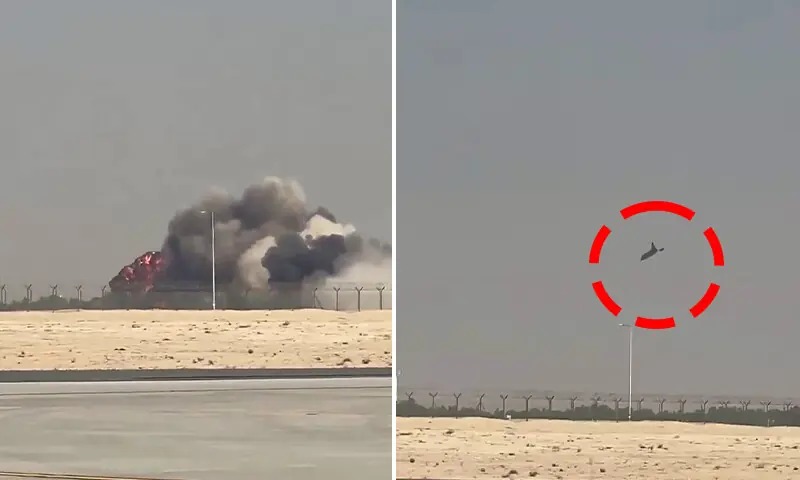
The IAF is encountering calamities resulting from its own actions. The third significant crash of a Tejas Light Combat Aircraft in merely two years is severely undermining the perception of India’s autonomous defense capabilities due to operational deficiencies. The latest incident, a severe collision during a landing procedure on 22 February 2026, has led to the destruction of an additional aircraft and the grounding of the entire fleet for immediate inspections. The recent accident, despite the pilot’s survival, underscores a concerning trend over the past two years characterized by mechanical failures and tragic deaths. The Tejas project has transitioned from mere delays to presenting a substantial risk, whether in the arid terrains of Jaisalmer or on the international stage in Dubai.
A Legacy of “Teething Issues” or Systemic Negligence?
The senior leadership of the Indian Air Force has consistently defended the Tejas initiative, ascribing its challenges and deficiencies to the typical difficulties encountered in a nascent aerospace industry. However, a detailed analysis of the project’s advancement over the last two years uncovers a potentially more significant issue of insufficient oversight and maintenance.
In March 2024, a Tejas aircraft crashed near Jaisalmer during a major demonstration involving all three branches of the military. Although the pilot successfully ejected, investigations indicated that the incident was attributable to an engine seizure, creating a perilous situation for a single-engine fighter jet.
In November 2025, a catastrophic event echoed globally. A disastrous incident transpired during an aerial acrobatics display at the Dubai Airshow, resulting in the death of Wing Commander Namansh Syal when his Tejas aircraft experienced a malfunction and subsequently crashed in a conflagration.
In February 2026, the recent landing incident has compelled the IAF to once again conduct a comprehensive safety assessment of its entire aircraft fleet.
The criticism of the IAF is simple: If the platform is truly “combat-ready,” why does it keep falling out of the sky during routine maneuvers and landings? The Dubai incident was particularly damning. To send a pilot into a high-stress
aerobatic routine with a jet that had been plagued by whispers of “oil leaks” and “engine issues” reflects a culture that may be prioritizing nationalistic pride over the lives of its officers.
The Mk1A Standoff: A Force in Decline
Despite these crashes, the IAF has doubled down with an order for 180 upgraded Mk1A jets. Yet, even here, the Air Force appears to be in a state of paralysis. While Hindustan Aeronautics Limited (HAL) claims aircraft are ready, the IAF has repeatedly pushed back acceptance, citing “quality compliance” issues and software glitches.
This creates a dangerous vacuum. The IAF’s fighter squadron strength has plummeted to roughly 31, far below the sanctioned 42. By tethering the nation’s security to a platform that is currently under constant “safety review,” the IAF has effectively hollowed out its own combat readiness. The force is now caught in a trap of its own design: it cannot rely on the Tejas, but it has no alternative ready to take its place.
aerobatic routine with a jet that had been plagued by whispers of “oil leaks” and “engine issues” reflects a culture that may be prioritizing nationalistic pride over the lives of its officers.
The Cost of Silence The IAF’s habit of hiding behind Court of Inquiry results that take years to materialize is no longer sufficient. Taxpayer money is being burned, but more importantly, the trust of the men and women who fly these machines is being eroded. The “extra safety checks” mandated today are a reactive admission of past failure. If the IAF cannot ensure the structural and mechanical integrity of its primary indigenous fighter, then the entire “Atmanirbhar” experiment in combat aviation is built on a foundation of sand. The question remains: How many more jets must be lost before the Air Force leadership admits that the Tejas, in its current state, is a flight of fancy that the country can no longer afford?







Leave a comment