








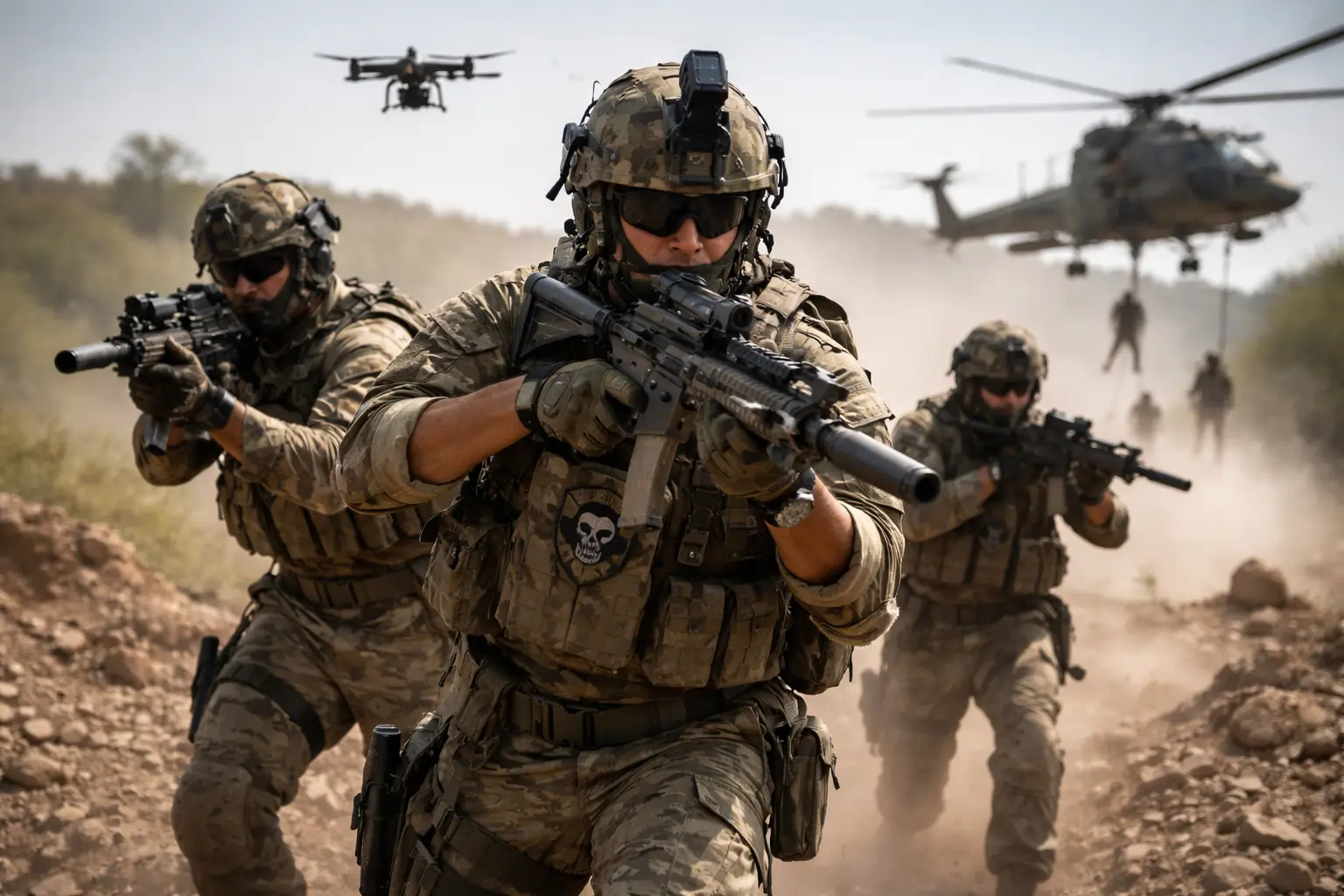
The Indian Army has announced a leap in its operational capabilities by raising the Bhairav battalions, a new category of “light commando” units designed to dominate the modern, hybrid battlefield. This initiative is a significant part of a broader force restructuring that aims to bridge the tactical gap between regular infantry and the elite Para Special Forces.
Key Developments:
- Bhairav Force Structure: Approximately 15 buildings are already operational, with a total of 25 planned. These units are agile, comprising 200 to 250 personnel drawn from various branches, including infantry, artillery, and signals.
- Mass Drone Integration: The army possesses a massive pool of over 1,000 trained drone operators, capable of deploying unmanned systems for precision strikes and real-world intelligence beyond a single territory.
- Strategy: Units like the two Bhairav ”Desert Falcons” utilize locally based troops with an insider’s understanding of the terrain and specific regional languages, enhancing their effectiveness in the sectors.
- Operational Skills: These forces recently completed successful validation during Exercise Akhand Prahar, demonstrating their ability to execute high-speed, offensive missions.
- Bhairav’s constructions were designed so that their public debut was during the army parade in Jaipur on January 15, 2026.
The Indian Army’s move to raise the Bhairav light commando units reflects a broader shift toward technology-driven warfare, combining rapid mobility with heavy drone integration. While the initiative aims to bridge the gap between infantry and elite Para SF units, it also raises questions around manpower strain, electronic warfare vulnerability, and long-term sustainability.
For a broader look at India’s evolving military posture and recent operational demonstrations read more
Strategic Concerns and Risks
While this transformation represents a leap toward technological modernization, it also introduces significant vulnerabilities and logistical complexities that merit scrutiny.
1. Dilution of “Special” Forces Status
The rapid raising of 25 “Special” battalions’ risks diluting the elite status traditionally held by Para SF. By sourcing troops from regular infantry for a 5-month training program, there is a concern that the Bhairav force may function more as “enhanced infantry” rather than a truly specialized elite unit. This could lead to a “quantity over quality” scenario where the designation of “Special Forces” is used to cover for basic technological upgrades.
2. Electronic Warfare Vulnerability
Heavy reliance on a pool of 100,000 drone operatives creates a massive surface area for Electronic Warfare (EW). If an adversary deploys superior GPS-jamming or signal-disruption technology, a force built around “drone-centric” combat could find its primary advantage neutralized, leaving troops vulnerable if traditional fieldcraft skills have been deprioritized in favor of tech-training.
3. The “Save and Raise” Manpower Crisis
Bhairav units are built on the ‘save and raise’ concept manpower is pulled from existing infantry battalions with no new recruitment driving the process. This raises the already existing personnel shortages within the regular units, which may weaken the “boots-on-the-ground” presence necessary to hold terrain and perform extended counter-insurgency work.












Leave a comment