



The 2026 ICC Men’s T20 World Cup, co-hosted by India and Sri Lanka, has entered a period of significant administrative and diplomatic scrutiny. At the heart of the impasse is a developing confrontation involving the Pakistan Cricket Board (PCB), the International Cricket Council (ICC), and the broader implications of the Bangladesh Cricket Board’s (BCB) recent displacement from the tournament. On 8 February, 2026, high-level negotiations took place at Gaddafi Stadium in Lahore, as global cricket officials sought to navigate a crisis that threatens the commercial and competitive equilibrium of the event.
Lahore High-Level Meeting
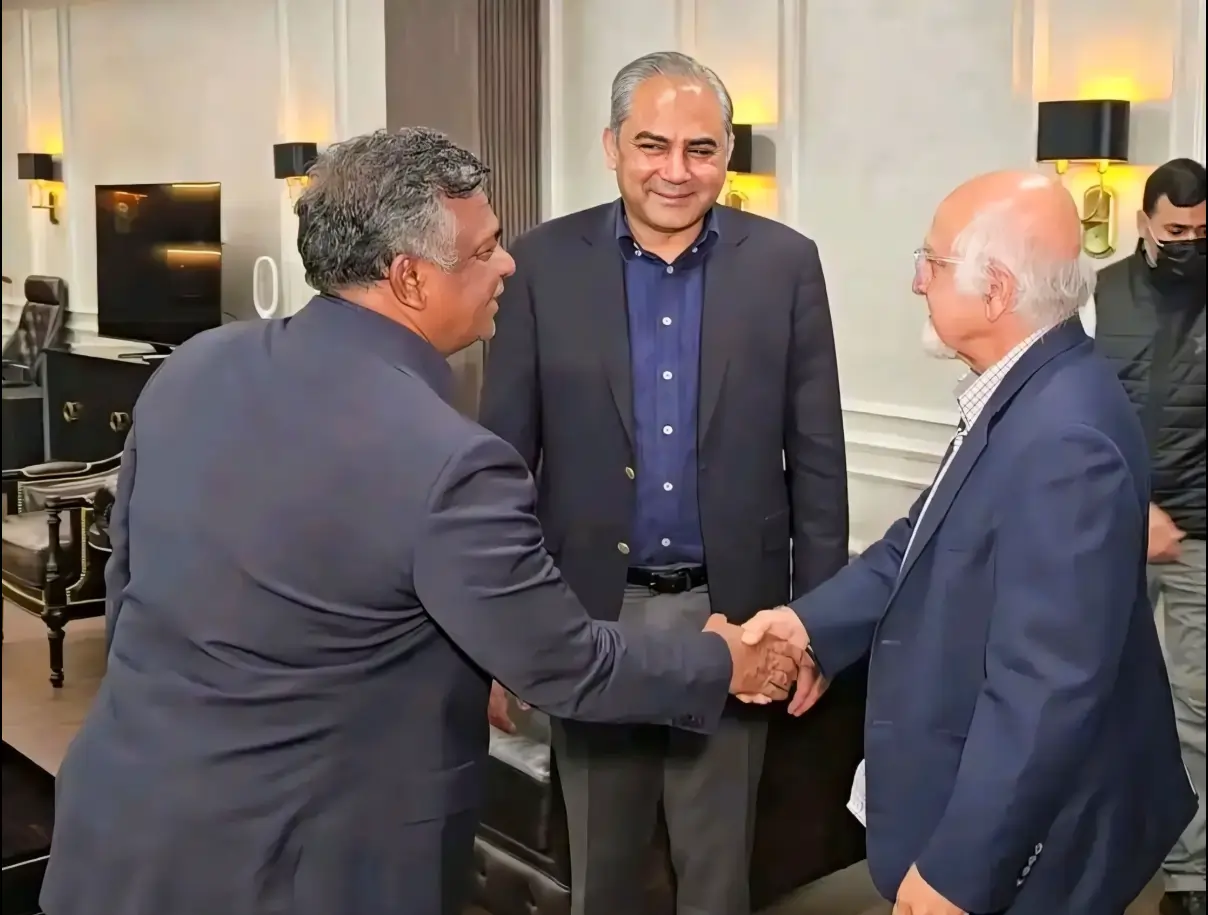
PCB Chairman Mohsin Naqvi met with ICC Deputy Chair Imran Khawaja and BCB President Aminul Islam. It has been described as a cordial meeting; the dominant theme was Pakistan’s announcement of a self-imposed boycott of the group-stage match versus India on February 15 in Colombo.
The meetings started with ceremonies to honor Khawaja and Islam, with the PCB’s top brass, including the CEO Salman Naseer and Adviser Amir Mir, in attendance. But the conversation quickly progressed to the main issues.
The main issue continues to be the Pakistan national team’s unwillingness to participate in the marquee event against India. While the PCB has stated Pakistan will be playing in every other fixture of the ICC Men’s T20 World Cup 2026, the India fixture remains a significant issue for the ICC. The Pakistan–India rivalry is, by far, the most commercially important fixture of the tournament, especially for its global broadcasting rights and sponsorship deals.
Reportedly, ICC Deputy Chairman Imran Khawaja urged PCB management to change their mind, saying there is a need to “consider participation in the broader interest of cricket.” The ICC formal stance is that it is challenging to understand the rationale of selective participation in light of the ICC constitution. In the spirit of the ICC documents, there is a belief that such actions compromise fairness in sports and disregard the value of international competition. In response, Chairman Mohsin Naqvi underscored that PCB’s responses are a result of actions taken by superiors. He explained that there is a line that the participation of a team in the Colombo match is a decision of the Government of Pakistan. Naqvi is expected to brief Prime Minister Shehbaz Sharif on the details of the ICC discussions in the next few days.
The Bangladesh Factor and Regional Solidarity
A secondary but vital layer to this diplomatic row is the involvement of the Bangladesh Cricket Board. Bangladesh was recently removed from the T20 World Cup 2026 roster and replaced by Scotland, a decision that followed disputes over hosting arrangements and the implementation of a hybrid model.
Pakistan has positioned itself as a supporter of the BCB’s grievances, citing concerns over inconsistent treatment of member nations by the governing body. During the meeting in Lahore, BCB President Aminul Islam formally thanked Pakistan for its support. This alignment suggests a growing focus among South Asian boards on the transparency of ICC governance and the equitable treatment of teams in major tournaments.
What T20 World Cup Means for the Future
As the T20 World Cup is still happening, the ICC will have a response about Pakistan’s conditions, proposals, and everything else, hopefully, within the next 48 hours. Pakistan’s conditions will anticipate the technical and commercial pathways for the tournament. If the stalemate continues, the ICC will have to think about a few complicated things:
- ICC will have to rearrange broadcasting and sponsorships to account for the most watched logistics for the tournament.
- ICC will have to figure out the points for the India-Pakistan match and make sure the qualification for the knockout stage is fair to all the teams.
- How the ICC will continue to deal with the intersections of government and sport mandates will continue to govern how the ICC is organized in future cycles.
With these things in mind, the cricketing world asks for a solution, and focus lays equally on the work in the embassy and on the fields.





Leave a comment