






The foreign policy establishment in New Delhi has long recognized a tacit, unsettling reality: while managing Dhaka is a profoundly internal crisis, managing Islamabad is purely a diplomatic and military matter.
Anxiety’s Geography: A Permeable and Armed Frontier
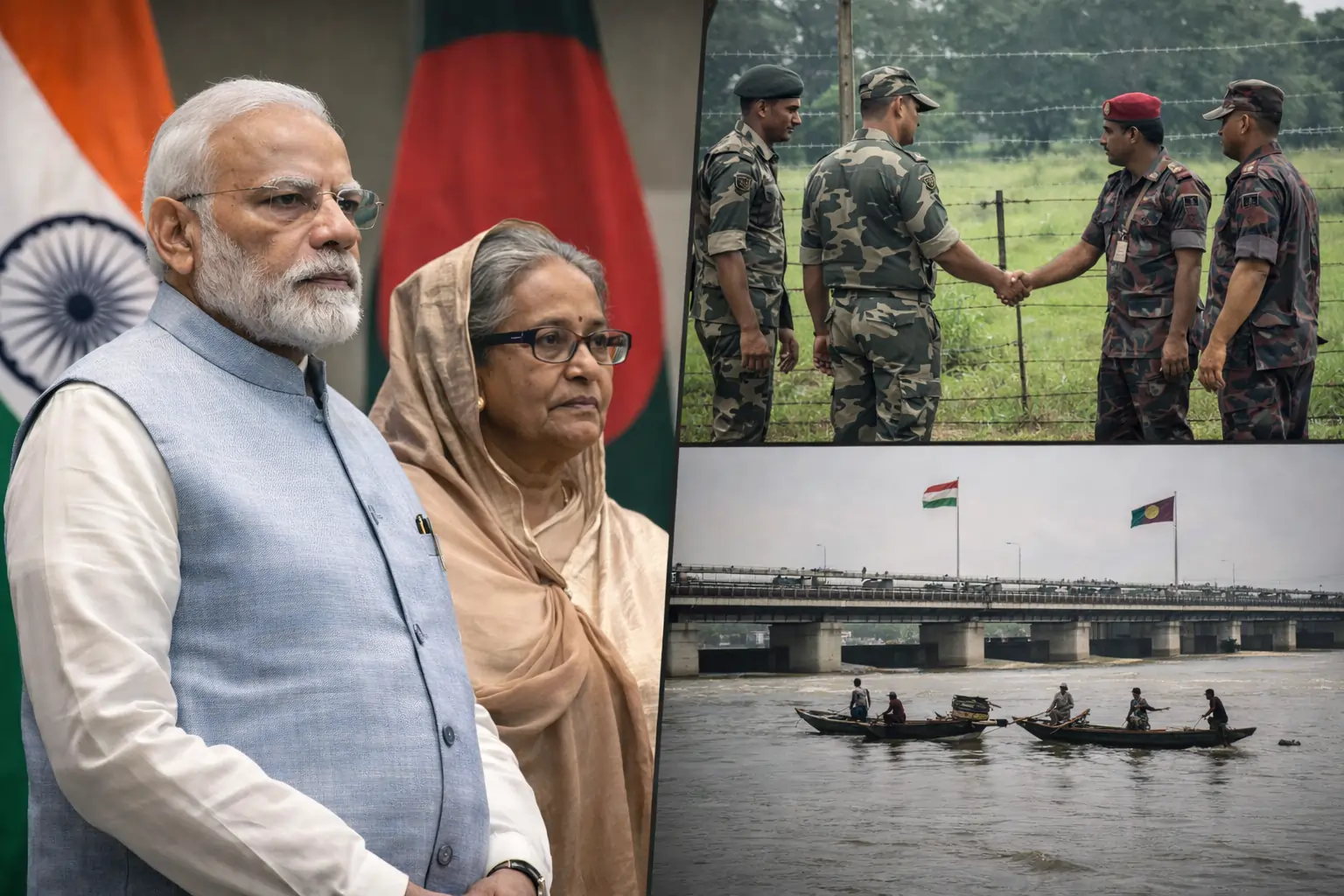
The 4,096.7-kilometer border between Bangladesh and India is the fifth longest in the world. The internal politics and economies of five Indian states, West Bengal, Assam, Meghalaya, Tripura, and Mizoram, are directly impacted by this highly militarized and porous border. Simple bilateral diplomacy is no longer effective when dealing with Bangladesh because of the complex web of geography, hydrology, and historical baggage.
Today, this relationship is undergoing a radical, forced reset. Bangladesh, a nation of over 170 million people, sits practically swallowed by the Indian landmass on three sides. This geographical chokehold fosters an acute, permanent anxiety regarding sovereignty in Dhaka. Proving its independence often means proving the Bangladeshi state’s political detachment from New Delhi. Since its violent separation from Pakistan in 1971, Dhaka’s internal narrative has been shaped by this underlying geopolitical claustrophobia.
The Cost of the Golden Age: Trade, Transportation, and Safety
Under Sheikh Hasina, New Delhi had a golden age of security cooperation for more than ten years. The numbers indicate a time of rapid economic integration. In the fiscal year 2022–2023, bilateral trade reached a record USD 15.9 billion, formally making Bangladesh India’s biggest trading partner in South Asia. India established crucial rail connections like the Akhaura-Agartala corridor, started the 130-kilometer Friendship Pipeline to supply high-speed diesel, and invested USD 8 billion in developmental lines of credit in Bangladeshi infrastructure.
Hasina met New Delhi’s top security demand in return: a ruthless crackdown on anti-India militant organizations like ULFA, who have historically used Bangladeshi territory as a staging ground.
Flipping the chessboard: The “Hasina Factor” and the BNP’s Comeback
However, indefinite stability is unacceptable in geopolitics. The diplomatic chessboard has been turned upside down by the significant change in power and the rise of Prime Minister Tarique Rahman and the Bangladesh Nationalist Party (BNP).
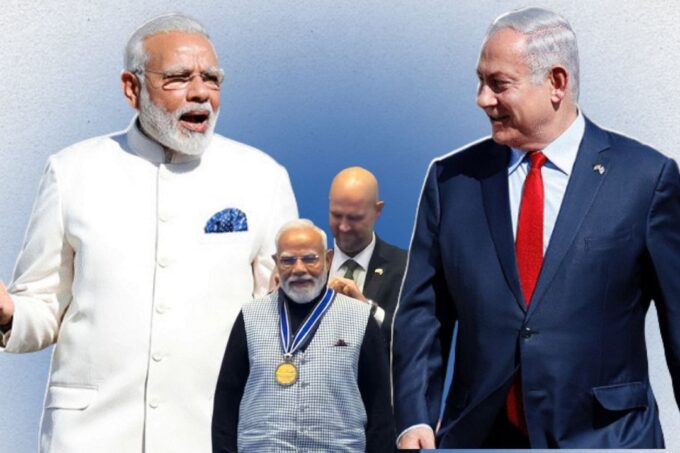
Extreme caution is required by historical data. New Delhi treated Dhaka with open animosity during the BNP’s previous rule, which lasted from 2001 to 2006, and accused the government of providing sanctuary to militants and permitting the smuggling of weapons into India’s unstable Northeast. But brutal pragmatism is required due to the political realities of 2026. Prime Minister Narendra Modi’s immediate diplomatic outreach to Rahman signals a necessary pivot. New Delhi realizes it cannot afford to alienate a government holding the public mandate, nor can Rahman afford to antagonize a neighbor that practically controls his nation’s overland trade routes and freshwater access. Rahman, having returned from a 17-year exile in London, possesses the political capital to build a new consensus, provided New Delhi respects his mandate.
The immediate obstacle is the “Hasina Factor.” The deposed leader remains the glaring elephant in the room. Providing her prolonged refuge directly complicates New Delhi’s standing with the new administration in Dhaka. Extradition demands or continued sanctuary will heavily strain this nascent diplomatic reset. Delhi must execute a surgical detachment from its past favorites, choosing the cold mechanics of statecraft over obsolete political loyalties.
The Ganges and Teesta Deadlines as Hydrological Ticking Clocks
Beyond the personalities of leaders, harsh environmental deadlines are approaching. There are 54 transboundary rivers between Bangladesh and India, and the hydrological clock is running out. The important 30-year pact that governs the distribution of the Farakka Barrage waters, the 1996 Ganges Water Treaty, formally ends in 2026.
A renewal negotiation is extremely difficult. It calls for cooperation with fiercely defensive state capitals like Kolkata as well as between New Delhi and Dhaka. State-level vetoes have a devastating impact on international diplomacy, as evidenced by the Teesta River water-sharing agreement, which has been stalled for more than ten years because the West Bengal government refused to give up its regional water rights to federal diplomatic interests.
Cold Pragmatism Over Grandstanding: The Survival Blueprint
Yet, history also provides a blueprint for what is mathematically possible when political will aligns. The 2015 Land Boundary Agreement (LBA) stands as a testament to hard diplomatic labor. That historic treaty cleanly swapped 162 sovereign enclaves, transferring 111 enclaves comprising 17,160 acres to Bangladesh, and 51 enclaves covering 7,110 acres to India. It abruptly ended the stateless limbo for over 50,000 residents who had lived in territorial obscurity since 1947. Achieving the LBA required an absolute parliamentary majority in New Delhi and a fully compliant counterpart in Dhaka.
Today, replicating that identical level of synergy is mandatory, yet the political landscape is infinitely more fractured. Severe trade deficits, where India exports roughly USD 12 billion while importing just under USD 4 billion, continue to fuel domestic resentment within Bangladeshi markets. Meanwhile, recurring fatalities at the hands of the Border Security Force (BSF) provide endless ammunition for anti-India political factions in Dhaka.
Grandstanding is a luxury neither nation can afford. Trade tariffs, border shootings, and trans boundary river disputes cannot be resolved through ideological rhetoric or historical nostalgia. The next decade of India-Bangladesh relations demands cold, calculated, and aggressively silent diplomacy. New Delhi must accept the structural limits of its influence over its neighbor, while Dhaka must recognize the inescapable gravity of its geography.











Leave a comment