





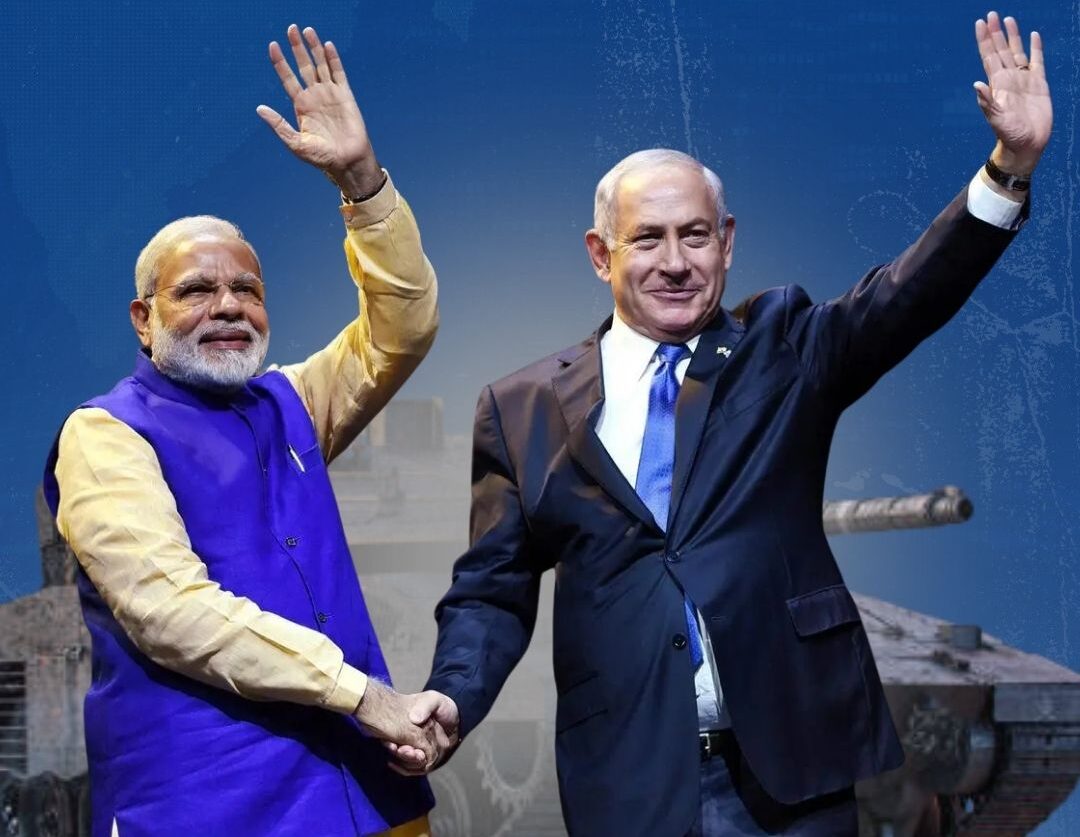
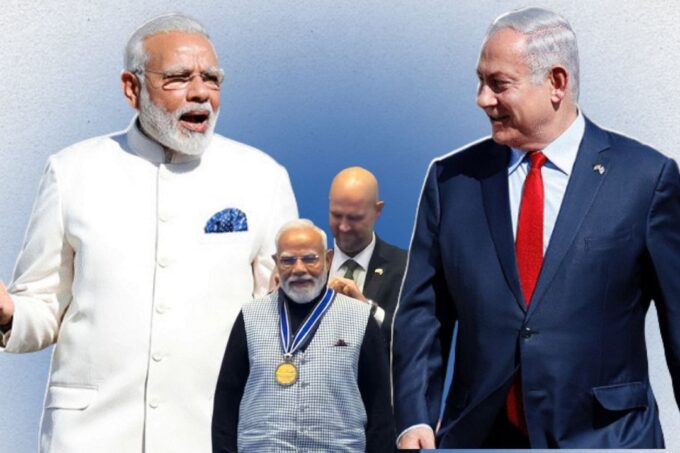
The upcoming visit of Prime Minister Narendra Modi to Israel on 25 Feb, 2026, marks a key, yet deeply controversial, juncture in Indian foreign policy. As New Delhi navigates a world increasingly polarized by the conflict in Gaza and the West Bank, it finds itself performing a high-stakes diplomatic tightrope walk. The central question remains: Is India’s “strategic balancing” a masterclass in pragmatism, or is it a slow-motion abandonment of its historical moral compass?
The Historical Pendulum: From Gandhi to Modi
To comprehend the present tension, one must examine the significant alteration in India’s trajectory. For decades, India’s position was shaped by its colonial trauma.
The Ideological Era (1937–1991)
The Gandhian Doctrine: In 1938, Mahatma Gandhi asserted, “Palestine belongs to the Arabs.” This was not mere rhetoric; it constituted a fundamental principle of the Indian National Congress, which perceived the Zionist movement as a colonial extension endorsed by the British.
During the Cold War, under the leadership of Nehru and Indira Gandhi, India became the inaugural non-Arab nation to acknowledge the PLO in 1974 and was among the earliest to recognize Palestinian statehood in 1988. Israel was distanced, perceived through the prism of non-alignment and the necessity to preserve relations with affluent Arab neighbors.
The phase of Realism (1992–Present): In 1992, amid the Cold War, Prime Minister Narasimha Rao formalized diplomatic relations with Israel. The covert “romance,” originating from Israeli arms deliveries during the wars of 1962, 1965, and 1971, has now been disclosed.
The Modi Shift: Since 2014, the relationship has evolved from “transactional” to “ideological.” The “Netanyahu-Modi embrace” represents a mutual perspective on counter-terrorism and technological autonomy.
The Significant Paradox: Condemnation versus Collaboration
India’s present position is fraught with visual contradictions. Shortly prior to this visit, India aligned with over 100 countries in denouncing Israel’s expansion in the West Bank. Nevertheless, the visit continues with complete grandeur.
| Area | Palestine | Israel |
| Foreign Policy | Supports a Two-State Solution | De facto “Strategic Partner” status. |
| UN Voting | Often refrains on Gaza ceasefire resolutions. | Condemns West Bank settlements to appease Global South/Arab allies. |
| Economically | Supporting Labour | Often refrains from Gaza ceasefire resolutions. |
| Defence | Humanitarian assistance to | India is the world’s largest buyer of Israeli defense tech |
The Defense Dilemma: Security at the Risk of Solidarity?
Israel perceives India not only as a buyer but as a partner of strategic value. The armed forces of Israel and India are now deeply integrated through joint ventures between Israeli corporations (Elbit, Rafael) and Indian companies (Adani, Tata). This pertains to India’s survival and sovereignty. Israeli technology is essential for overseeing the Line of Control (LoC) with Pakistan and the Line of Actual Control (LAC) with China. This engenders a moral “gray zone”: Can India genuinely assert its role as a champion of the “Global South” while its defense budget ostensibly supports the military-industrial complex of a nation indicted for genocide in international tribunals?
What Actions Will India Undertake?
New Delhi is under scrutiny as it is one of the few global powers that possesses a direct communication line to both Jerusalem and Riyadh, in addition to Tehran.
The Practical Approach: Modi is expected to employ “neutral, highly diplomatic” language towards Gaza, emphasizing “Innovation” and “Water Security” to divert attention from the geopolitical turmoil.
The “Bridge” Narrative: India aims to establish itself as a mediator. By engaging Netanyahu, Modi can assert that he is the sole leader capable of advising the Israeli leadership to exercise “restraint,” although critics contend that this “advising” has produced minimal outcomes for Palestinians.
Domestic Balancing: To mitigate domestic dissent, such as from the Congress party, anticipate a supplementary announcement regarding augmented humanitarian assistance or a reaffirmation of the “Two-State” objective during the visit.
An Examination of “Great Power” Aspirations
India’s neutrality is both its paramount strength and its most conspicuous weakness. Although “strategic balancing” addresses India’s immediate defense and economic requirements, it jeopardizes the “moral leadership” India aspires to on the global stage.
For India to attain the status of “Vishwa Guru” (Global Teacher), it must ultimately determine whether its silence on Palestine is a strategic imperative or a deviation from the anti-colonial principles that founded the Indian nation.









Leave a comment